This is a challenging month for stargazing, it’s been raining most nights. Luckily during the final three nights of July we had brief clear patches, but fast-moving clouds limited us to targeting areas with the best sky conditions.
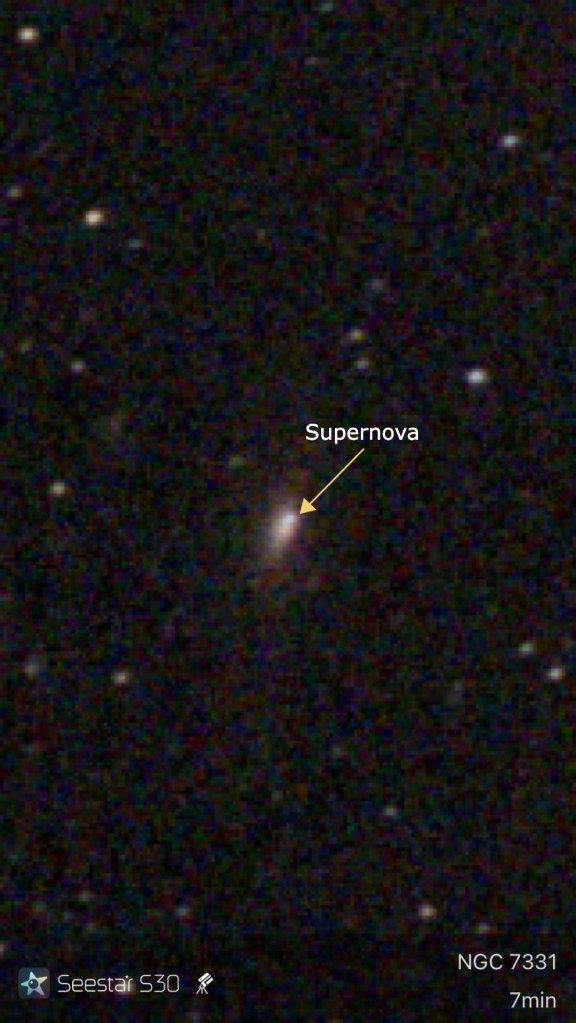
Our primary target was Supernova 2025rbs in NGC 7331! Here’s the list of deep-sky objects (DSOs) we successfully imaged:
- NGC 7293, Helix Nebula
- NGC 7023, Iris Nebula
- IC 1396, Mu Cephei
- Saturn
Learning Siril and Graxpert
Another significant challenge in this hobby is operating under Bortle 7 skies. While I appreciate the stacked images from the Seestar S30, I knew the data could be stretched further with proper processing.
I’ve been learning Siril and Graxpert and the more I process images, the more I am understanding what I am doing, lol.
My priority is extracting maximum detail from the data rather than focusing solely on aesthetics.
Here’s the Iris Nebula: 79 subs x 20s
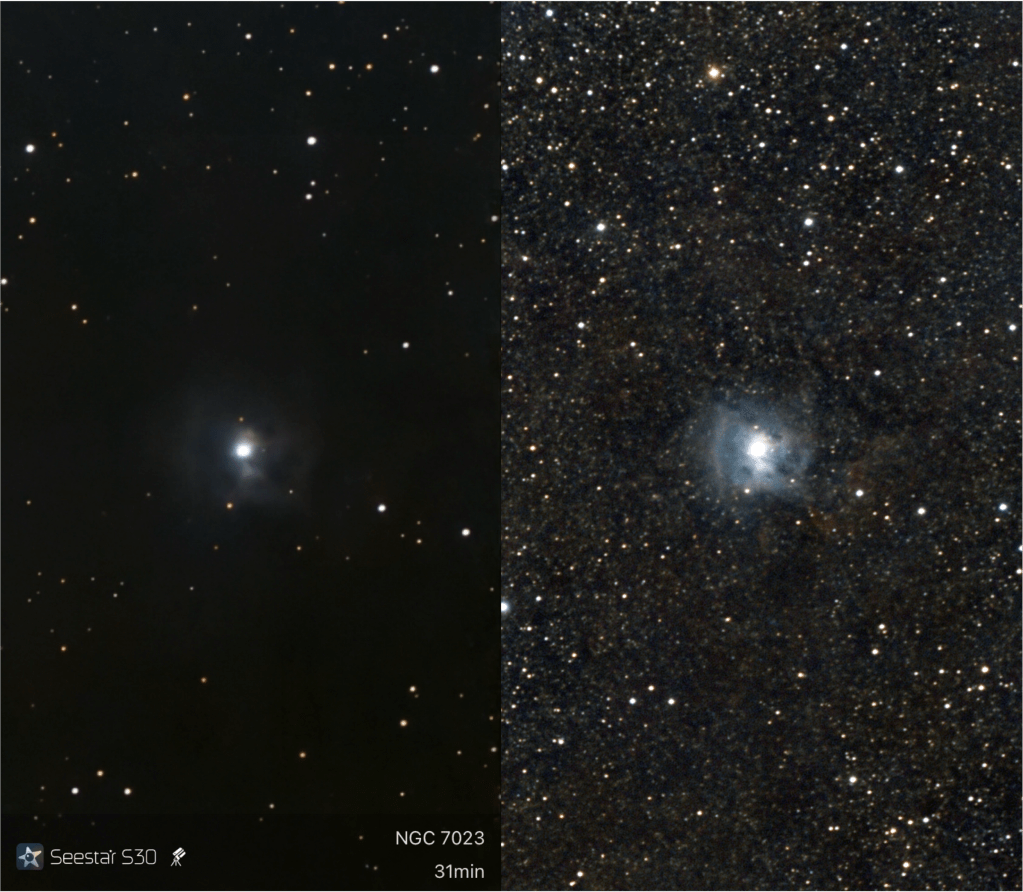
Seestar S30 App (left), Siril x Graxpert (right)
Here’s the Andromeda Galaxy, 135 subs x 20s
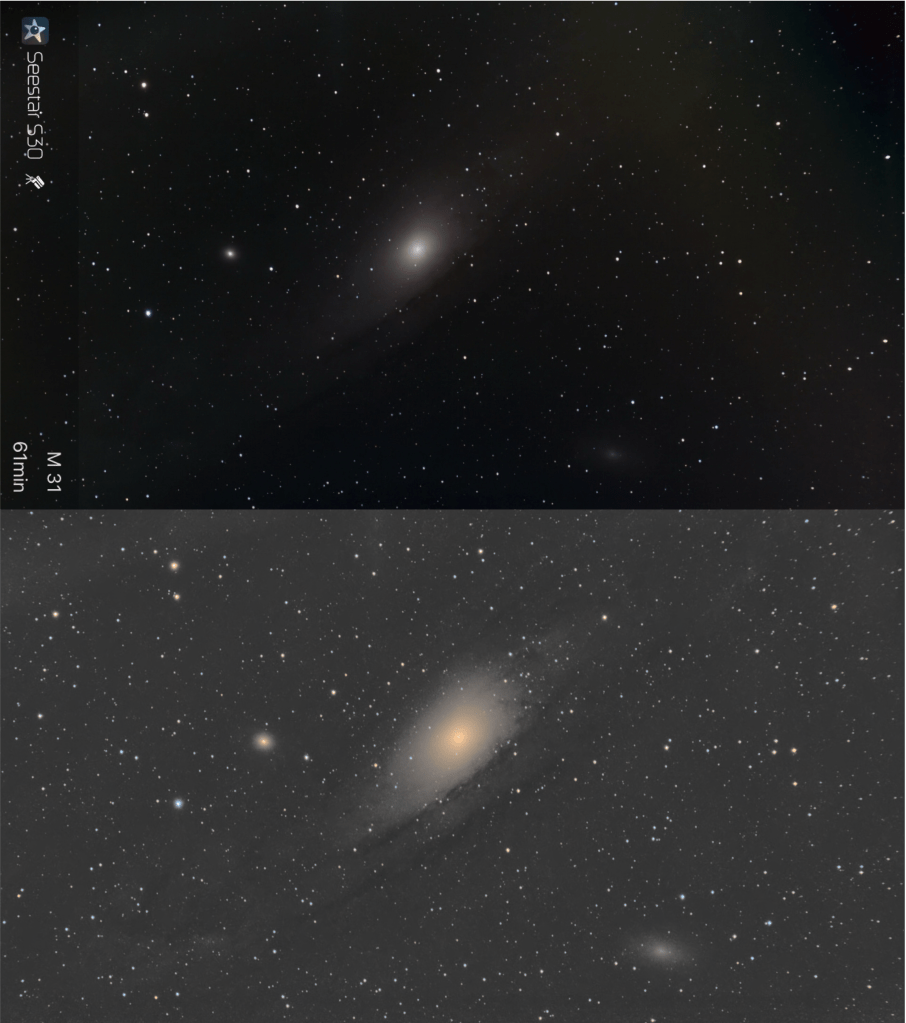
Seestar S30 App (top), Siril x Graxpert (bottom)
I’m still refining my technique, but here’s my current processing workflow~
Downloads
Siril
- I run the script to stack the images
- Image Processing > Remove Green Noise
- Tools > Astrometry > Image Plate Solver
- Image Processing > Color Calibration > Spectrophometric Calibration
- I crop before saving as Linear to process in Graxpert
Graxpert
- I load the saved *.fit file
- Background Extraction using AI as Interpolation Method
- Denoise Image
- Save again to stretch in Siril
Siril
- Image Processing > Stretches > Generalised Hyperbolic Stretch Transformations
I don’t have any processing tips to share since I’m still deep in the learning process myself. I attempted several other targets but didn’t achieve results that were significantly better than what the Seestar app produces automatically.
It’s been a frustrating month overall, but I’m hopeful for clearer skies in August.
===
That’s it for now! Stay tuned for more stargazing stories.
🌹

Leave a comment