After my 10-day break, I had to catch up with a lot of work, and then I came down with a cold. October’s weather proved to be another challenging month for stargazing—it was either raining or cloudy. So I decided to focus on C/2025 A6 Lemmon and C/2025 R2 SWAN whenever I could.
C2025/A6 Lemmon
While I was still wheezing from my cold, I decided to climb Hemeishan (和美山步道) before sundown. From where I am, I only have a few minutes to catch this comet before it dips behind the horizon. Unfortunately, it was still too bright, so I couldn’t gather more than one minute of data. But thanks to Seestar S30’s Scenery Mode, I managed to catch a glimpse – just a blip!
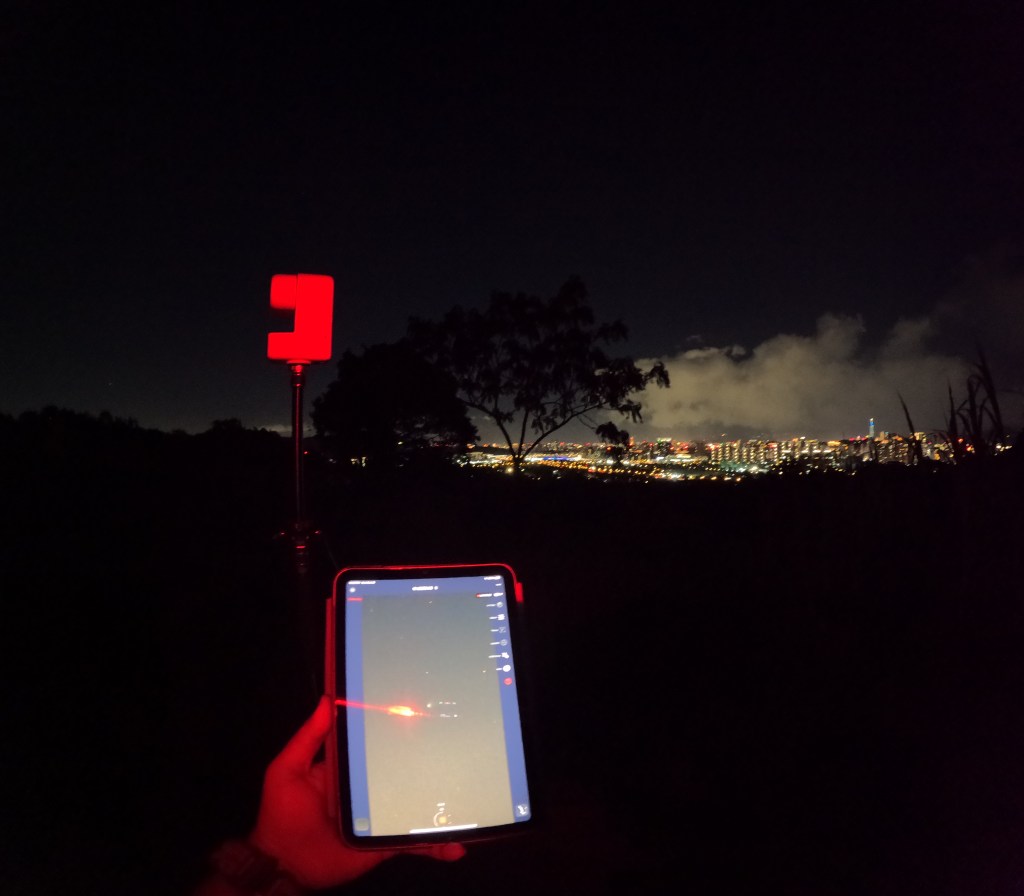
My second attempt was at Sun Moon Lake the night before the marathon. Unfortunately, the comet was hiding behind the clouds!
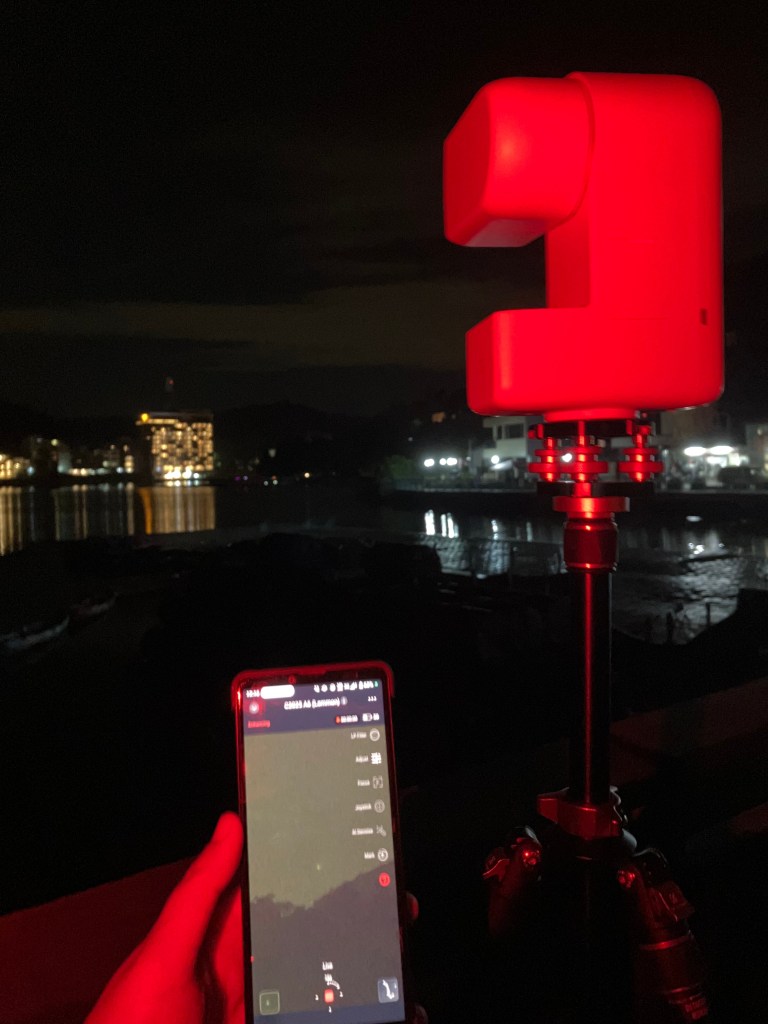
You can find more info about A6 Lemmon here: https://theskylive.com/c2025a6-info
C/2025 R2 SWAN
I had more luck with R2 SWAN, gathering 2-3 minutes of data, though the tail remained elusive. But I did manage to capture two swans in one frame – the Swan Nebula and Comet SWAN!
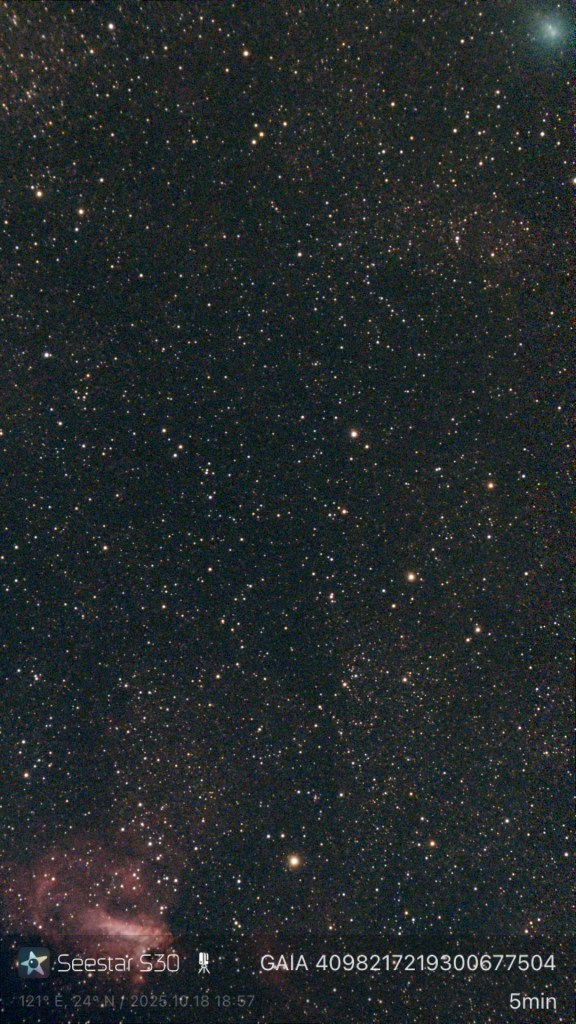
Find more info about R2 Swan here: https://theskylive.com/c2025r2-info
How to track a comet with Seestar S30?
- After you’ve setup your scope, tap Sky Atlas
- Tap Objects, search for the comet and tap GOTO
There have been experiments in the community about the most ideal exposure settings, and of course, I did my own. However, the cloudy conditions forced me to gather data for only 2-3 minutes.
I then followed a tutorial from Naztronomy on YouTube to stretch what little data I had.
Earthlings won’t be seeing these comets again for another 600–1,300+ years, which is why I appreciate Seestar for letting me glimpse the light from these celestial objects. My mom couldn’t care less, though.
===
That’s it for now, with hopes and prayers for more cloudless skies in November!
🌹

Leave a comment