A colleague who knows I’m into stargazing messaged me asking if I was planning to see the moon tonight. Although I still had to pack my stuff for a trip the next day, I said yes! If I can introduce this night activity and encourage one person to look up at the sky, why not?!
I immediately checked clearoutside.com to see if we’d have cloudless skies and whether the moon would be high enough around 10PM. It looked like we had about 2 hours before clouds started rolling in.
In addition to my scope, I also brought my trusted Canon EOS 1100D with EF 55-250mm lens and GoPro 13.
Where to set up in Taipei?
Bitan Riverside
Bortle Scale: 6-7
Not ideal since it’s super bright with the riverside restaurant, hanging bridge, and water fountain show that wasn’t turned off until midnight, plus all the residential buildings. But hey, we’re shooting the moon and it’s going to be bright! Luckily it was rising from the south where the mountains are, so we didn’t have to deal with the light pollution coming from Taipei.
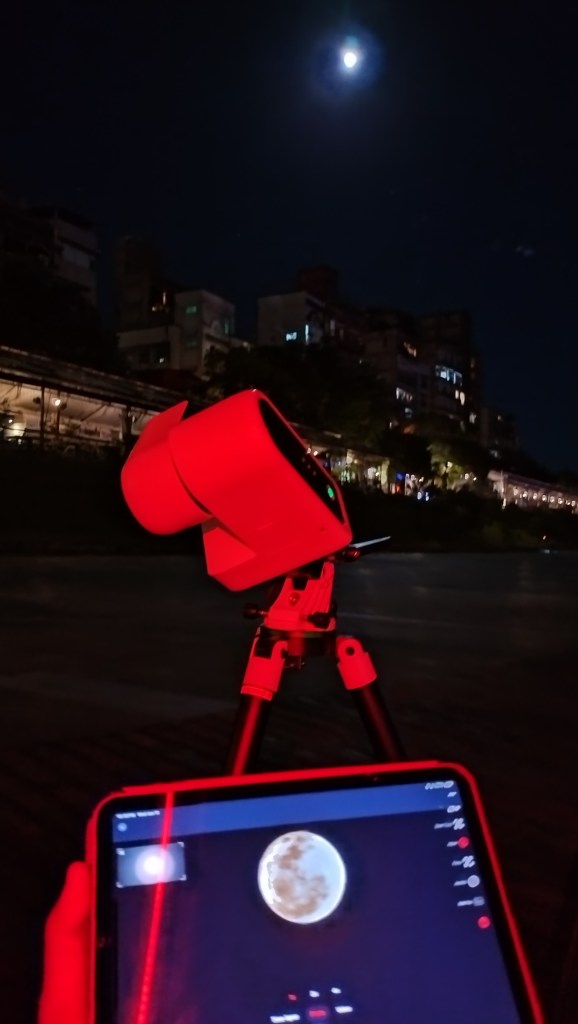
It was a quick setup to get started with the Seestar S30 finding the moon. But because the moon was too bright, we had to use manual settings to reduce the exposure otherwise we will miss a lot of details. We took a few 10s-20s-30s videos while also watching what I’m guessing was a satellite/Starlink passing by the moon. Once we were happy with that, I wouldn’t waste my chance on a cloudless night not pointing to new deep space objects!
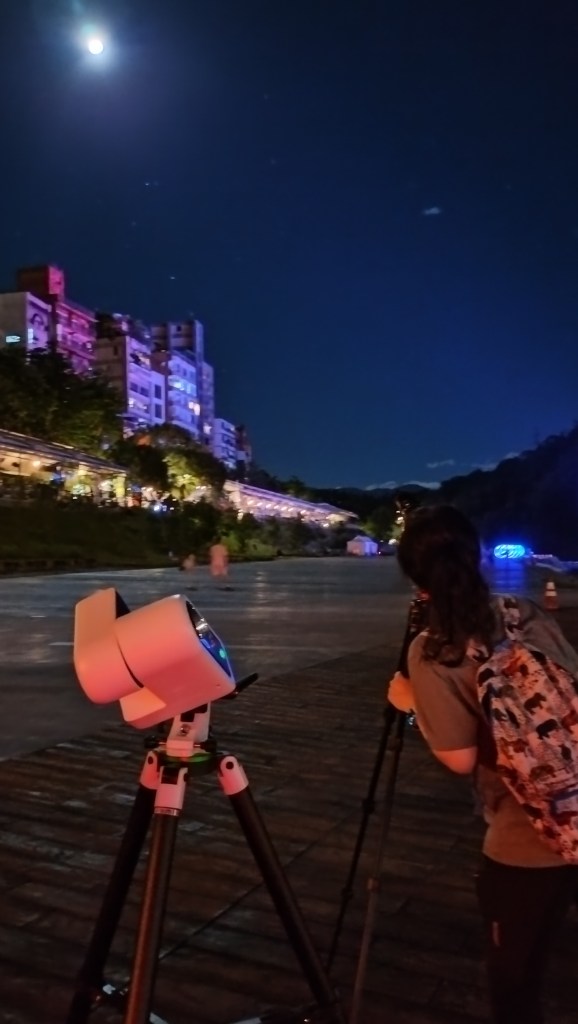
While the scope was pointing to a new DSO target, I let her look at the moon through my camera. There’s skepticism about Seestar—whether it’s AI-generated and just showing what it wants on my iPad—but after seeing the moon through a telephoto lens, the delight in her voice saying “It’s the same!” was amusing. Then I realized there was no SD card and I couldn’t photograph it, so I set up my GoPro to do its thing getting star trails.
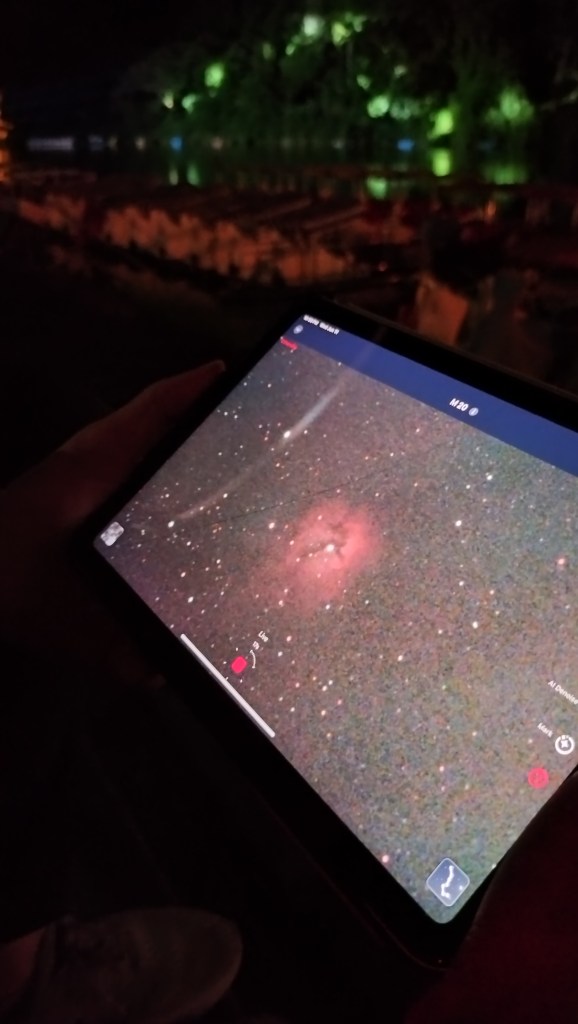
Back to the scope, we looked at M20, or the Trifid Nebula, and the look on her face when the “crack” in the sky showed up on my iPad screen! She said she got goosebumps! After 15 minutes of data, we pointed to another object, NGC 6888 or the Crescent Nebula, which kind of looked more like the outline of a human brain with just 15 minutes of data. Still very pretty to look at. And finally, I added more data to M16 or the Eagle Nebula and explained to her my fascination with the Pillars of Creation, which are at the center of the Eagle Nebula.
My colleague waited for the pictures to download, and she was excited to share what she saw—what we captured—with her husband and son. She’s hoping she can share an interesting story with her son, especially since the next Strawberry Moon will happen after 18.6 years (almost 20 years!). As for me, I’m quite happy about this night because there’s someone who shared the same level of enthusiasm (besides Gerald) about this newfound hobby.
===
Hopefully, we’ll have more cloudless skies this summer so I can continue looking up at the sky!
🌹

Leave a comment