It’s only been a little over a month since I started using the Seestar S30, and I’m still addicted to looking up at the night sky whenever possible. For this Europe trip, I decided to bring my beginner setup since everything could fit in my luggage!
In this post
The Setup
- Smart Telescope: Seestar S30
- Tripod: K&F Concept 210
- EQ Mount: Sky-Watcher Star Adventurer Latitude EQ Base
- Carry-on Luggage: The North Face Fusebox
- Tripod goes in my Thule Subterra Luggage
- “Eyepiece”: iPad Mini 6
- Red light: Decathlon Headlamp
- For star trails: GoPro 12 and an old tripod
Software Tools
- clearoutside.com to check the Bortle scale or dark sky level, sky visibility percentage, and sunset forecasts
- windyty.com for visual weather and cloud forecasts
- Stellarium and Google Sky Map apps
- Seestar app
Finding Where to Setup
Iseltwald
Bortle Scale: 4
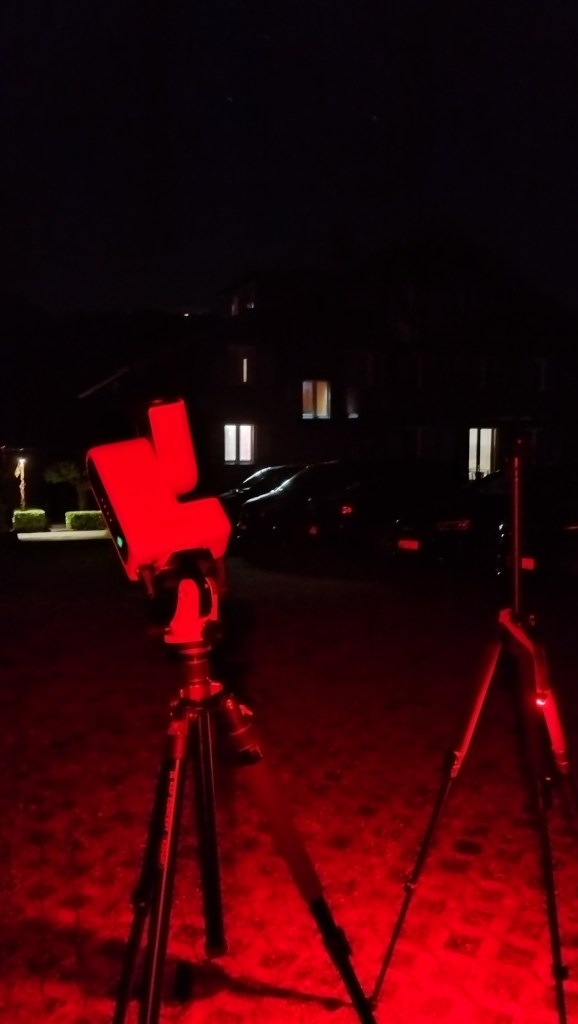
This village is situated away from large city lights, which made me really excited to observe the sky. As soon as we checked in, I asked the front desk staff at Lake Lodge where we stayed if he had suggestions for where I could set up. He enthusiastically pointed to an area near the church to avoid street lights and get total darkness.
We first checked the car park just outside the hotel and thought it was perfect! One challenge I found was being surrounded by mountains, which limited our targets to what was directly overhead.
On the second night, we decided to set up in the open restaurant in front of the lodge instead so we could sit comfortably.
Berlin
Bortle Scale: 6
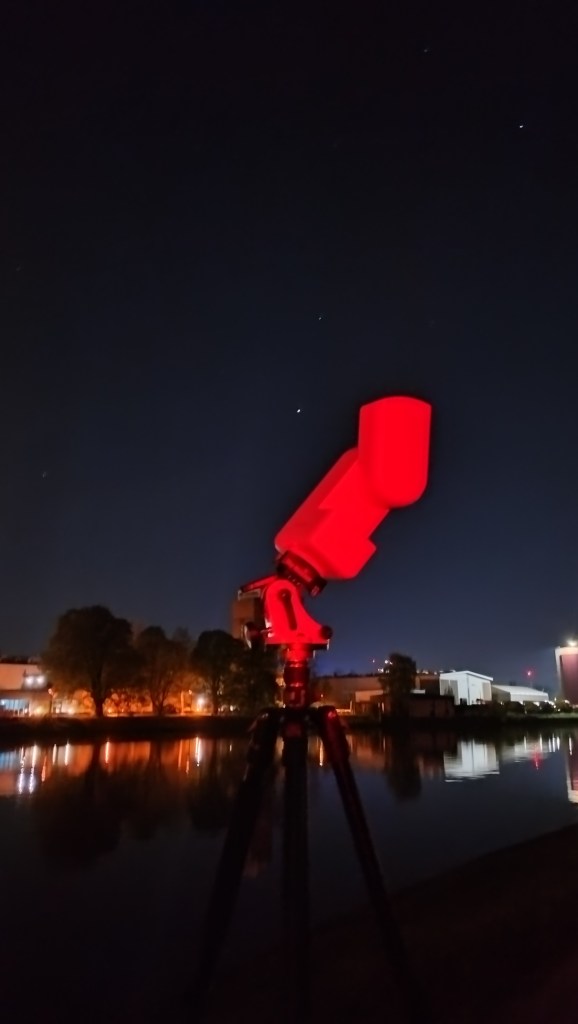
I told my friend I was bringing my telescope and asked where I could set up. He suggested the Spree River, which was just a few hundred steps from his house. It had seats where our friends could drink and share life stories while we waited for deep space objects to materialize on my iPad screen.
Prague
Bortle Scale: 7
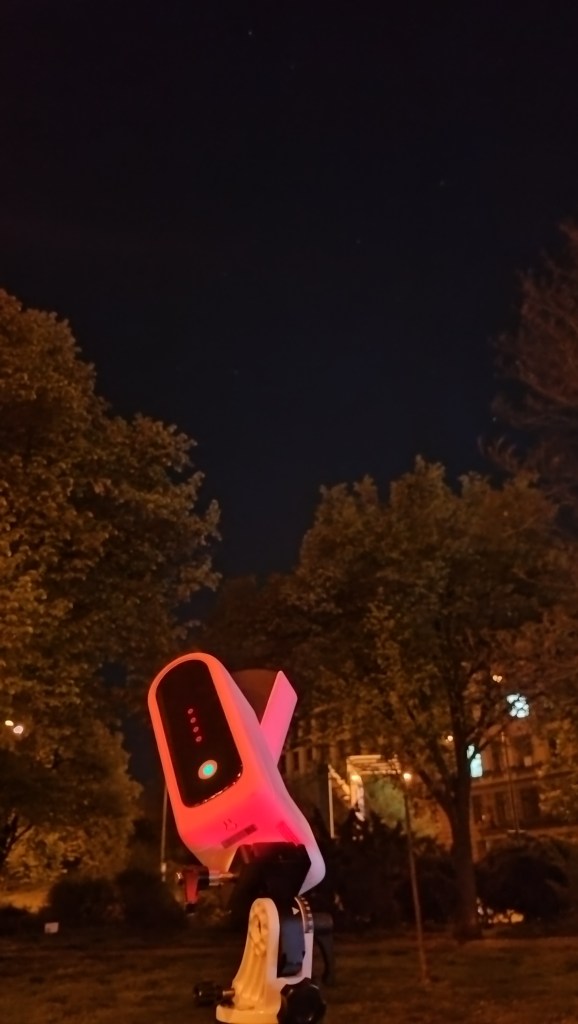
At this point, my friends realized it could take hours to gather data on certain deep space objects, so I was on my own looking for a place to set up. I checked Google Maps for patches of green near our Airbnb, went out with my gear, and looked for open sky not obscured by trees. I ended up across from Vincanto Rooms in Old Town Prague 1. Police passed by twice but didn’t bother me. The small park also seemed to be a path for locals walking dogs, so I felt safe. There was even a guy who stayed and chatted with me for 20 minutes, asking about the equipment and targets while offering suggestions for where to set up the next night.
Staying Comfortable
Check the temperature and dress appropriately!
Finding Targets
We’re still new to this, so we’re not systematically looking for targets. I don’t memorize constellations or Messier objects and only know a few galaxies and nebulae. (Gerald is more knowledgeable tho) So I rely on:
- Seestar App’s suggestions
- Stellarium and Google Sky Map to see what’s available tonight
- ZWO Facebook Group posts
What We Observed
Iseltwald
- NGC 4565 “Needle Galaxy” – 42 mins
- M65 “Leo Triplet” – 12 mins
- IC 405 “Flaming Star Nebula” – 22 mins
- NGC 7380 “Wizard Nebula” – 51 mins
- Star trails pointing to the north
- Star trails pointing to the south
Berlin
- M109 “Vacuum Cleaner Galaxy” – 35 mins
- M101 “Pinwheel Galaxy” – 24 mins
Prague
- M101 “Pinwheel Galaxy” – +50 mins
There’s something magical about watching a tiny dot transform into a spiral galaxy or glowing nebula as your telescope patiently gathers light from the cosmos. Smart telescopes are breaking down barriers to this hobby, making it possible to stargaze even while traveling with minimal equipment.
Whether you’re in a dark village or a bright city, I encourage you to look up. The universe is full of wonders waiting to be discovered, and modern technology has made it easier than ever to start this journey.
Once you see these celestial objects with your own setup, the night sky will never look the same again.
===
That’s it for now! Stay tuned for more amateur astrophotography posts.
🌹

Leave a comment